
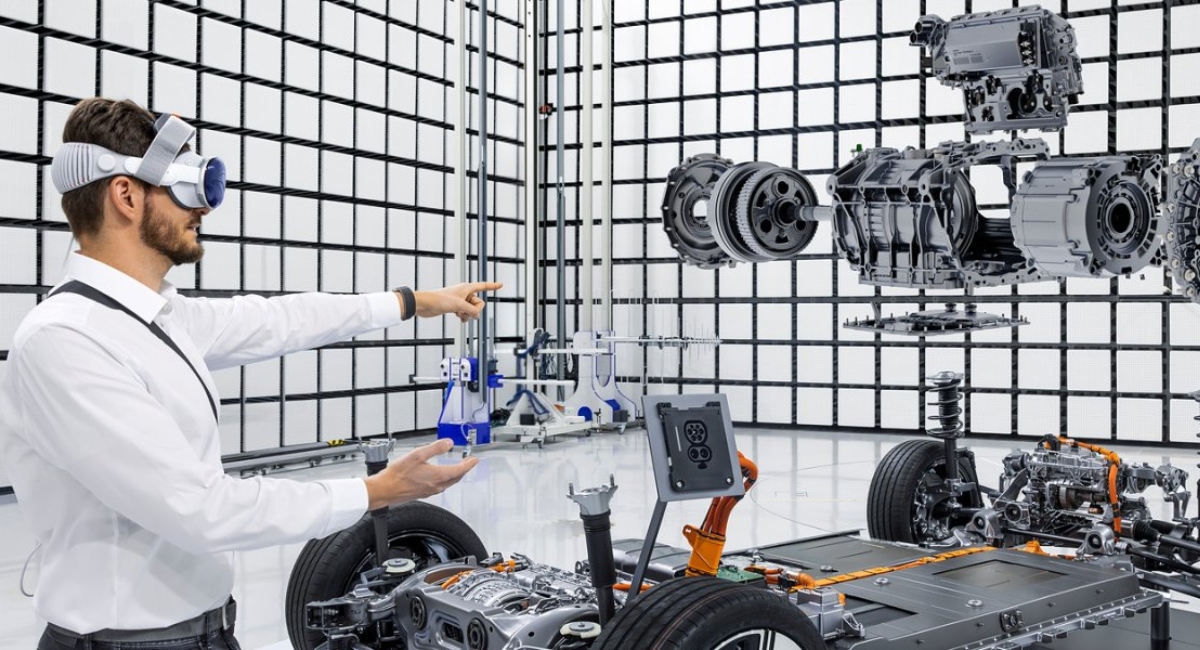
The world of luxury automobiles is no longer defined purely by comfort or craftsmanship—it’s increasingly shaped by motorsport innovation. Mercedes-Benz, in particular, stands at the crossroads of these two worlds. The brand’s cutting-edge Formula 1 engineering doesn’t stay confined to the racetrack; it actively influences the development of its road-legal performance machines. This synergy has redefined what a luxury performance car can be.
The Evolution of Mercedes’ Motorsport DNA
Mercedes-Benz’s involvement in Formula 1 has never been just about winning races. It’s an ongoing experiment in extreme efficiency, speed, and reliability. The Mercedes AMG High Performance Powertrains (HPP) division operates as an innovation hub where technologies born from F1’s intense environment are refined and adapted for consumer cars. Every insight gained—whether in aerodynamics, materials, or hybrid systems—filters down into the Mercedes-AMG lineup.
Rather than functioning as separate entities, Mercedes-AMG and Mercedes’ Formula 1 team maintain a symbiotic relationship. Engineers frequently collaborate, ensuring that developments in one field complement advancements in the other. The result is a steady technological “trickle-down” effect, ensuring that high-performance road cars benefit directly from track-tested technologies.
F1-Derived Hybrid Powertrains: Redefining Efficiency and Performance
One of the most remarkable examples of motorsport transfer is Mercedes’ hybrid technology. Formula 1’s MGU-H (Motor Generator Unit – Heat) and MGU-K (Motor Generator Unit – Kinetic) systems have revolutionized how energy is captured, stored, and redeployed. Mercedes engineers took inspiration from these systems to develop the E PERFORMANCE hybrid platform.
In production cars such as the Mercedes-AMG GT 63 S E Performance, the hybrid system combines a V8 engine with an electric motor positioned at the rear axle. This setup not only improves traction but also allows for instantaneous torque delivery, mirroring the responsiveness of a Formula 1 car. The electric motor is powered by a 400V high-performance battery—a direct descendant of the energy store technology pioneered in F1.
These innovations go beyond speed. They redefine efficiency. By repurposing wasted heat and kinetic energy, Mercedes has managed to create a powertrain that delivers unmatched acceleration while reducing fuel consumption and emissions—an engineering achievement that perfectly balances performance and sustainability.
Lightweight Engineering and Advanced Materials
Every gram counts in Formula 1, and Mercedes applies the same principle to its road cars. The use of carbon-fiber reinforced polymer (CFRP), aluminum, and magnesium alloys has become standard in performance-oriented Mercedes models. These materials were initially perfected in the racing world for their superior strength-to-weight ratio.
For example, the Mercedes-AMG ONE—a road car directly derived from F1 technology—utilizes a carbon monocoque chassis identical in philosophy to that used in the Mercedes-AMG F1 W12 race car. This results in a car that’s not only exceptionally rigid but also remarkably light, enhancing both safety and handling dynamics.
Lightweight engineering extends to smaller components as well. Even the seat frames, suspension arms, and braking systems employ optimized geometries to minimize mass without compromising strength. This obsessive attention to detail stems directly from the F1 design culture, where performance margins are measured in thousandths of a second.
Aerodynamics: Sculpting the Perfect Flow
In Formula 1, aerodynamic efficiency can be the difference between victory and defeat. Mercedes engineers apply the same aerodynamic principles to their road cars—balancing drag reduction, cooling efficiency, and downforce.
Vehicles like the Mercedes-AMG GT Black Series or the AMG ONE showcase active aerodynamic systems, including adaptive front splitters, air curtains, and retractable rear wings. These systems automatically adjust in real time, optimizing airflow depending on speed, cornering, and braking. The concept of “active aero,” once exclusive to race cars, is now a core part of Mercedes’ high-performance lineup.
Even the smallest details—such as underbody airflow channels, diffuser designs, and side vent placement—are informed by thousands of hours of wind-tunnel testing. The result is a fleet of cars that slice through the air with surgical precision while maintaining visual drama.
Data-Driven Development and Digital Simulation
In both racing and production, Mercedes relies heavily on data analytics and simulation tools. Formula 1 cars generate terabytes of data per race, informing real-time decision-making and long-term engineering insights. Mercedes leverages this same digital infrastructure to optimize its road cars.
Using Computational Fluid Dynamics (CFD), engineers simulate airflow and thermal behavior long before a prototype hits the track. Machine learning algorithms predict stress points and component wear, allowing for predictive maintenance systems in production vehicles. This fusion of artificial intelligence and engineering precision ensures every Mercedes model performs flawlessly under real-world conditions.
The AMG ONE: The Apex of Technology Transfer
The Mercedes-AMG ONE stands as the ultimate proof of concept—a road-legal vehicle powered by an actual Formula 1 engine. Its 1.6-liter turbocharged V6 hybrid power unit, coupled with four electric motors, mirrors the exact architecture used in Mercedes’ championship-winning F1 cars.
Producing over 1,000 horsepower, the AMG ONE redefines what’s possible for a street-legal vehicle. Beyond raw performance, it embodies the culmination of years of research, collaboration, and adaptation. The challenge was immense: transforming a high-revving F1 engine, built for short race distances, into a durable, reliable powertrain capable of enduring years of daily use. Achieving this balance required innovations in cooling, lubrication, and exhaust systems—all derived from racing expertise.
Sustainability and the Future of Performance
Mercedes-Benz’s future lies in merging sustainability with performance. Formula 1’s shift toward hybrid and sustainable fuels aligns perfectly with Mercedes’ long-term strategy for electrified mobility. The brand’s AMG E PERFORMANCE series and Vision EQXX concept car are early examples of this evolution.
The Vision EQXX, for instance, showcases next-generation battery density, aerodynamic efficiency, and energy management systems inspired by racing analytics. It managed to travel over 1,000 kilometers on a single charge, setting new benchmarks for electric vehicle efficiency. This demonstrates that Mercedes doesn’t just borrow technology from F1—it reimagines it for an electric future.
The Competitive Edge of Continuous Innovation
Mercedes’ approach to integrating Formula 1 innovation into its production line has set an industry benchmark. Competitors often struggle to replicate the same depth of synergy between motorsport and manufacturing. This advantage is rooted in Mercedes’ unified engineering ecosystem—where the lessons of the racetrack shape the factory floor.
Continuous innovation ensures that every Mercedes, from the AMG GT to the EQS, embodies a philosophy of relentless improvement. It’s not about creating faster cars—it’s about creating smarter, more responsive, and more efficient machines.
Conclusion
Mercedes-Benz has blurred the line between racing excellence and everyday performance. The technological migration from Formula 1 to road-legal cars showcases how competition fuels creativity. Through hybrid systems, lightweight engineering, aerodynamics, and digital development, Mercedes continues to redefine what luxury performance means in the modern era. The result is not just a car—it’s the embodiment of motorsport’s relentless pursuit of perfection.
FAQs
1. What specific F1 technologies are used in Mercedes road cars?
Technologies like hybrid energy recovery systems, lightweight carbon-fiber materials, and active aerodynamics are directly adapted from Formula 1 vehicles.
2. How does the AMG ONE differ from traditional supercars?
It uses an actual F1-derived engine architecture, combining a 1.6L turbo V6 with four electric motors, offering unmatched hybrid performance.
3. What makes Mercedes’ hybrid systems unique?
Their integration of F1’s MGU-K and MGU-H principles allows for superior energy recovery and instantaneous torque delivery.
4. Are these F1 technologies exclusive to AMG models?
While most innovations debut under AMG, many trickle down into mainstream Mercedes models over time.
5. How does Mercedes ensure durability for F1-derived parts?
Components are extensively re-engineered, tested under real-world conditions, and adapted for longevity and comfort.
6. Does Formula 1 still influence electric Mercedes models?
Absolutely. Data analytics, energy management, and cooling systems from F1 continue to shape the EQ electric lineup.
7. What’s next for Mercedes in performance innovation?
Expect deeper integration of AI, sustainable materials, and biofuel-compatible hybrid systems—all rooted in the brand’s motorsport legacy.