
The romantic ideal of the American cross-country road trip has long been defined by open desert highways, neon motel signs, and five-minute gasoline fill-ups beside lonely interstate ramps. For years, driving an electric vehicle across state lines felt like an exercise in high-stakes problem-solving—a journey punctuated by nervous glances at battery percentages, nail-biting detours to single, broken chargers behind abandoned auto malls, and persistent range anxiety.
That era of EV travel is officially behind us. Between coast-to-coast high-speed charging corridors, widespread access to previously walled-off charging networks, and advanced in-vehicle route planners, crossing North America on electrons is entirely practical. Yet, embarking on a three-thousand-mile electric journey still requires a distinct operational mindset. Successfully crossing the continent in an EV is not about replicating the frantic cadence of an internal combustion road trip; it is about embracing a deliberate, rhythmic travel style where vehicle charging seamlessly aligns with human rest stops, meals, and real-time navigation strategy.
Deconstructing the Charging Curve: Why 80 Percent Is the Real Finish Line
The single biggest mistake new EV road-trippers make is treating an electric battery like a traditional fuel tank. When driving a gas car, filling up to full at every pump makes mathematical sense because a gas pump dispenses fuel at a constant flow rate from empty to full. Lithium-ion batteries behave entirely differently.
Due to the chemical mechanics of DC fast charging, an EV accepts electrical energy at its highest velocity when the battery is nearly empty. As the battery’s state of charge climbs past sixty or seventy percent, the vehicle’s onboard battery management system intentionally throttles the charging speed to protect the cells from excessive heat and degradation. By the time the pack hits eighty percent, charging speeds often drop from two hundred kilowatts down to a modest trickle.
Because of this taper, sitting at a fast charger waiting for that final twenty percent can take longer than the entire journey from ten to eighty percent. The secret to fast travel is the splash-and-dash strategy. Plan your route to arrive at high-output chargers with a low state of charge—ideally between ten and fifteen percent—and unplug the moment your battery reaches seventy-five or eighty percent. Hopping between lower-half battery states keeps your stops short, efficient, and aligned with the sweet spot of your car’s charging curve.
Mapping Infrastructure and Redundancy: The Multi-App Strategy
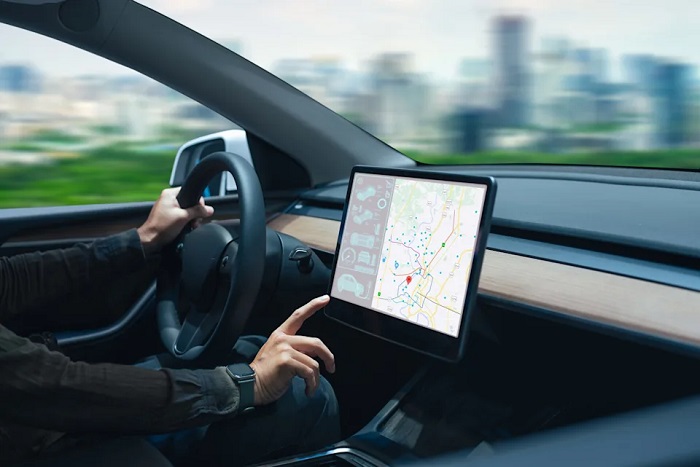
Modern in-vehicle navigation systems have made tremendous strides, but a cross-country trek demands redundant data sources before you pull out of your driveway. Relying exclusively on a single in-dash map can leave you blind to real-time station outages or localized congestion along busy travel corridors.
Build your master itinerary using dedicated EV trip-planning software that factors in topography, real-time weather, ambient temperature, vehicle payload, and battery degradation. Pair this planning tool with crowd-sourced charging network apps that display user check-ins from the last twenty-four hours. A station might appear operational on an automated network dashboard while its card readers are malfunctioning or half the stalls are blocked by ongoing maintenance.
When selecting charging locations, follow the rule of station redundancy. In remote highway stretches—such as Interstate 80 across Wyoming or Interstate 10 across West Texas—never route yourself toward an isolated, two-stall outpost unless absolutely unavoidable. Instead, prioritize large charging plazas offering eight, twelve, or twenty high-speed stalls located alongside round-the-clock amenities. Always maintain an arrival buffer of at least fifteen to twenty percent battery upon reaching any planned charger, which preserves enough reserve energy to reach an alternate station should your target location experience a localized power failure.
Thermal Management: The Crucial Role of Preconditioning
An EV’s charging speed is governed as much by battery temperature as it is by the station’s rated kilowatt output. In cold climates or during high-speed highway cruising, an unprepared battery pack will throttle incoming current to avoid thermal shock, extending what should be a twenty-minute pause into a frustrating hour-long delay.
Achieving peak charging performance requires active battery preconditioning. When you route your drive through your car’s native navigation system and select a DC fast charger as your official destination waypoint, the vehicle automatically begins conditioning the high-voltage pack miles before arrival. In cold weather, it warms the internal cells to their optimal charging window; in scorching summer heat, it cools the battery to prevent thermal throttling.
If you bypass the built-in navigation in favor of a standard phone-based map, your vehicle will not know it is approaching a high-voltage charger, leaving the battery cold or heat-soaked upon plug-in. Let the car’s native software manage thermal preparation so you can plug in, ramp up to peak kilowatts immediately, and get back on the highway without delay.
Optimizing Daily Rhythms Around Destination Charging
A well-executed EV road trip transforms downtime into forward momentum. Rather than spending valuable daytime hours tethered to highway chargers, savvy long-distance travelers extract maximum value from overnight stops.
When booking lodging across your route, prioritize hotels, motels, and bed-and-breakfasts that provide Level 2 destination charging. Plugging into an overnight charger adds roughly twenty to thirty miles of range per hour while you sleep, allowing you to wake up each morning with a fully conditioned, one-hundred-percent battery. This single logistical choice wipes out the need for a morning charging stop, letting you clock three or four hours of highway travel before making your first daytime plug-in.
Coordinate your daytime fast-charging stops with meals rather than taking dedicated fuel breaks. A twenty-five to thirty-minute DC charging window matches the exact time required to stretch your legs, visit the restroom, and grab lunch or an afternoon coffee. When vehicle recharging operates as a quiet background event to your normal travel routine, charging stops never feel like an interruption.
Aerodynamics and Highway Speed Realities
Internal combustion engines run relatively efficiently at sustained highway speeds because highway cruising bypasses the fuel-wasting stop-and-go friction of city driving. Electric vehicles operate under inverse physics. Because EVs utilize regenerative braking to reclaim momentum in the city, high-speed interstate cruising represents their most energy-intensive driving scenario.
Aerodynamic drag increases exponentially with velocity. Pushing an EV through the air at eighty miles per hour consumes substantially more kilowatt-hours per mile than cruising at seventy miles per hour. On long, desolate highway segments between distant charging plazas, dialing back your cruise control by just five or six miles per hour can extend your actual range by fifteen to twenty percent. That slight adjustment can mean the difference between rolling into a planned charging hub with a safe battery reserve or facing an emergency slow-charge detour.
Pack with hardware versatility in mind. Ensure your trunk contains a heavy-duty NACS-to-CCS or CCS-to-NACS adapter, a standard J1772 adapter, and a universal mobile charging cable equipped with both standard household wall plugs and heavy-duty 240-volt NEMA adapters. Having the hardware to tap into an RV park’s fifty-amp campground pedestal provides an unbeatable safety net if severe weather or mountain road closures force an unexpected route change.
Approached with the right technical awareness, a cross-country electric road trip sheds the frantic rush of the traditional drive. The rhythm of travel becomes smoother, quieter, and fundamentally more relaxing, letting you rediscover the vastness of the continent with complete confidence in every mile ahead.